Link Building Services for SaaS: The Playbook That Actually Drives Rankings, Traffic & Revenue
Learn how SaaS companies use link building services to drive rankings, traffic, and revenue with proven strategies.

Most SaaS companies don’t have a link-building problem.
They have a relevance, authority, and positioning problem.
After working on SaaS SEO campaigns for over a decade, one pattern is painfully clear: throwing links at a site doesn’t move the needle anymore. What works now is strategic link acquisition tied to product positioning, search intent, and distribution leverage.
That’s exactly where professional link-building services come in—but only when used correctly.
This guide breaks down how SaaS link building actually works in 2026, what separates high-growth brands from stagnant ones, and how to build links that drive real revenue—not just vanity metrics.
The SaaS Link Building Reality (That Most Teams Ignore)
Let’s address the uncomfortable truth.
Google doesn’t rank SaaS pages because they have “more backlinks.” It ranks them because:
- They’re cited in relevant ecosystems
- They’re mentioned in contextually trusted environments
- They demonstrate topical authority over time
This means a DR90 link from a generic blog is often less valuable than a DR50 link from a tightly aligned niche site.
Yet most SaaS teams still optimise for:
- Domain Rating
- Link volume
- Homepage links
That’s not strategy—that’s outdated SEO.

What High-Performing SaaS Link Building Looks Like
If you reverse-engineer SaaS companies dominating SERPs, you’ll notice three patterns:
1. They Build Links to Commercial Pages (Not Just Blogs)
Most SaaS brands hide behind blog content.
The winners don’t.
They acquire links directly to:
- Feature pages
- Comparison pages
- Landing pages
This is where modern link-building services can make a real difference—by placing contextual links where conversion happens, not just informational content.
2. They Use Guest Posting as Distribution, Not Just Links
Guest posting is misunderstood.
It’s not about “getting a backlink.” It’s about injecting your brand into existing audiences.
A well-executed guest post service does three things simultaneously:
- Builds authority through association
- Drives qualified referral traffic
- Creates brand mentions that feed AI search systems (LLMs)
That last point is critical.
We’re now in a search landscape where mentions matter as much as links.
3. They Align Links With Search Intent Clusters
Random backlinks don’t build authority.
Top SaaS brands map links to:
- Topic clusters
- Product use cases
- Funnel stages
For example:
- TOFU → educational guest posts
- MOFU → comparison and alternatives content
- BOFU → product-led pages with contextual links
Without this alignment, links don’t compound—they just exist.
Strategic Link Building Framework for SaaS
Here’s a simplified version of what actually works.
Step 1: Identify Revenue Pages
Stop asking: “Where can we get links?”
Start asking: “Which pages generate revenue?”
These typically include:
- Landing pages
- Feature pages
- Integration pages
Your link strategy should start here—not end here.
Step 2: Build Topical Authority Around Them
Create supporting content clusters that:
- Answer adjacent queries
- Capture long-tail traffic
- Earn natural links
Then funnel authority internally.
Step 3: Acquire Contextual Links in Relevant Niches
This is where most SaaS teams fail.
They chase authority instead of relevance.
For niche SaaS (e.g., travel tech), targeted placements like travel guest posting outperform generic placements because:
- The audience is aligned
- The context reinforces your product
- The link signals are stronger
Relevance compounds. Authority alone doesn’t.
Step 4: Layer Digital PR & Mentions
Links are no longer the only signal.
Brand mentions—especially in authoritative publications—feed:
- Google’s entity understanding
- AI-generated search results
This is why SaaS brands investing in PR consistently outperform those relying purely on outreach.
The Hidden Layer: Link Velocity & Consistency
One of the most overlooked factors in SaaS SEO is link velocity.
Publishing 50 links in one month and stopping does nothing.
SaaS growth requires:
- Consistent acquisition
- Natural velocity patterns
- Ongoing brand exposure
This is why scaling with structured link building services often outperforms in-house sporadic efforts.
Common SaaS Link Building Mistakes (That Kill Growth)
Let’s be direct.
If your strategy includes any of these, you’re leaving growth on the table:
- Building links only to blogs
- Ignoring anchor text distribution
- Over-optimising exact match anchors
- Chasing DR instead of relevance
- Treating guest posts as a checkbox activity
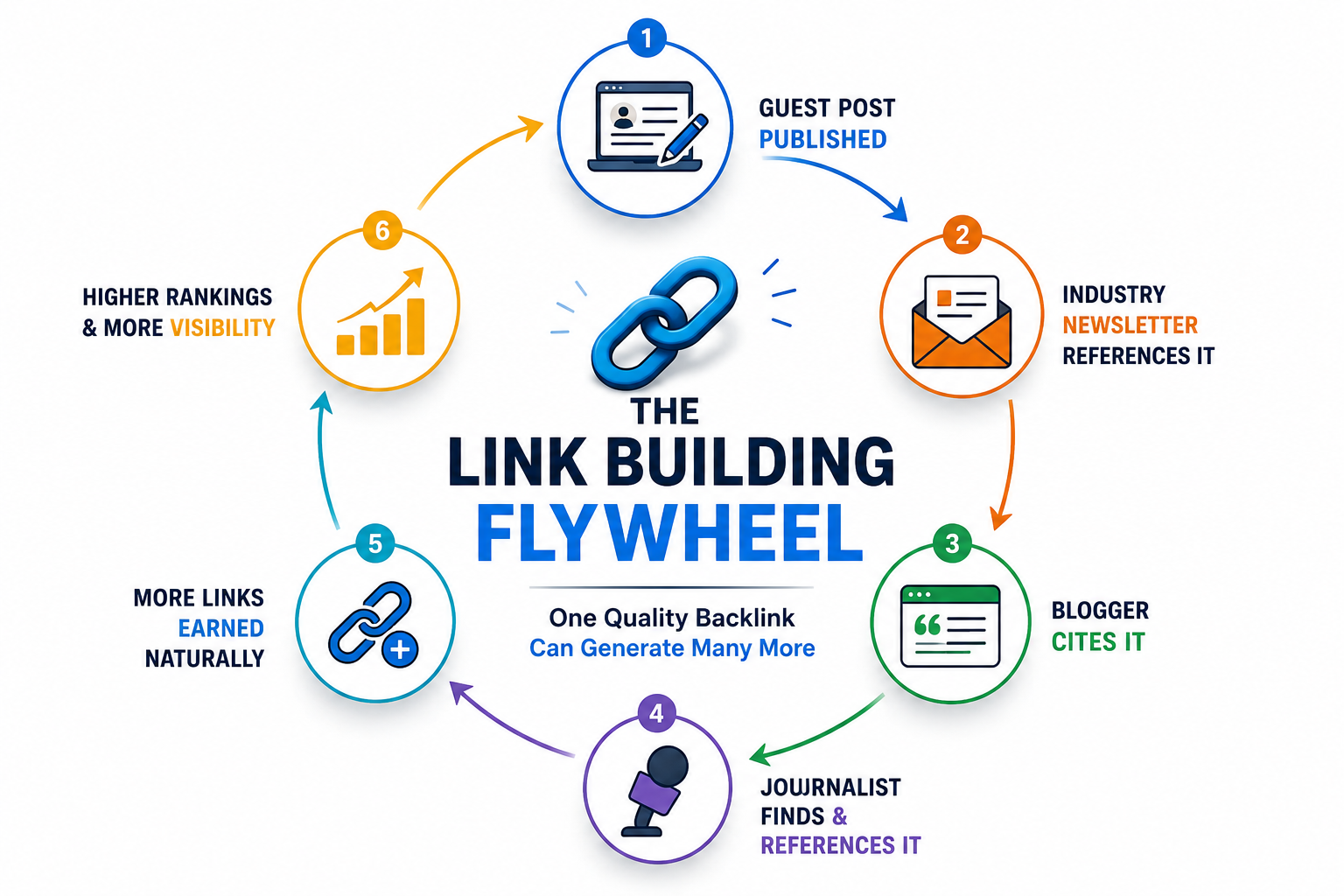
Link building is no longer a tactic.
It’s a distribution system.
Final Thought: SaaS Link Building Is a Leverage Game
The best SaaS companies don’t “build links.”
They build systems that attract, place, and compound authority over time.
If your current approach isn’t driving rankings, traffic, and conversions simultaneously, it’s not a link problem—it’s a strategy problem.
And that’s exactly where the right link building services can give you an unfair advantage.
If you want SaaS links that actually move rankings (and revenue), focus less on volume—and more on strategic placement, relevance, and consistency.
Updated